
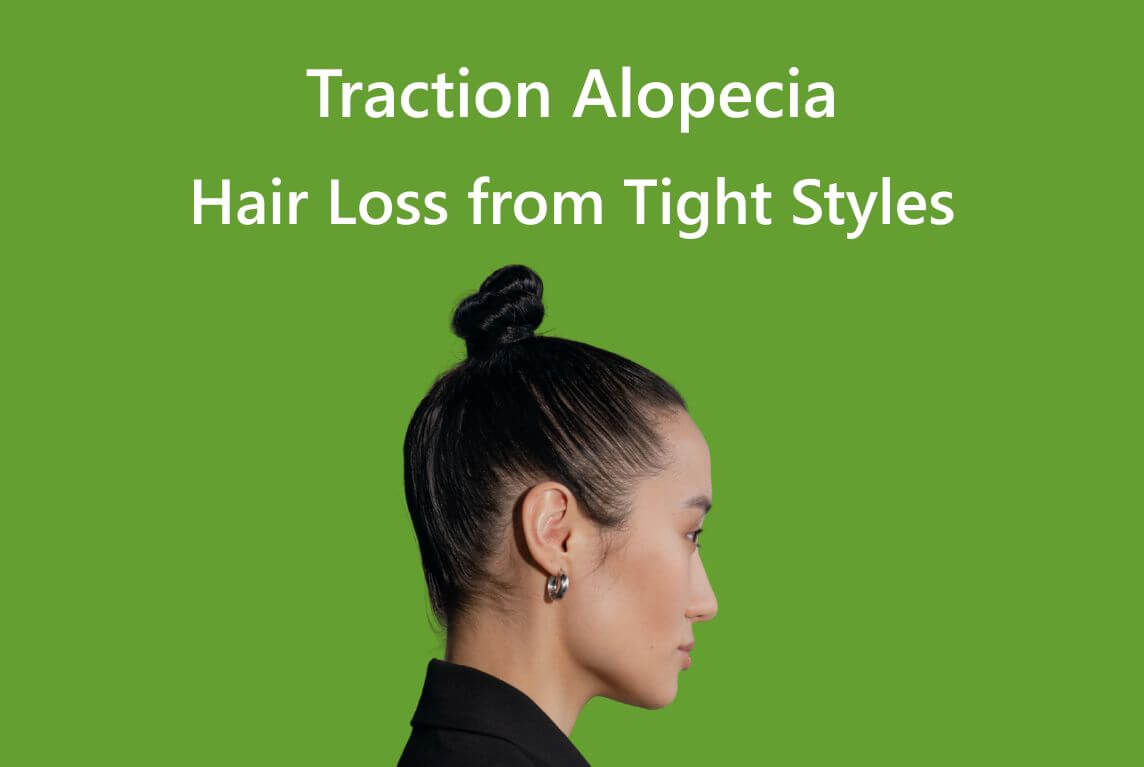
Traction Alopecia: A Common but Often Overlooked Cause of Hair Loss
By NuWave Hair Solutions
Hair loss can be distressing, especially when it happens gradually and without obvious warning signs. One frequently overlooked cause—particularly among women—is traction alopecia. Unlike hormonal or genetic hair loss, traction alopecia is caused by repeated tension on the hair follicles over time.
At NuWave Hair Solutions, we see traction alopecia often, and the good news is that when caught early, it can be preventable and sometimes reversible.
What Is Traction Alopecia?
Traction alopecia occurs when hair follicles are exposed to chronic pulling or tension, leading to follicle stress, inflammation, and eventually hair thinning or loss. This type of hair loss commonly affects the hairline, temples, and crown, but it can occur anywhere tension is applied.
Common hairstyles associated with traction alopecia include:
-
Tight ponytails or buns
-
Braids, cornrows, or extensions
-
Sew-ins or weaves
-
Tight headbands or wigs
-
Repeated slick-back styles
Over time, constant tension weakens the follicles and disrupts normal hair growth cycles.
Early Signs of Traction Alopecia
Recognizing traction alopecia early is critical. Warning signs may include:
-
Thinning around the hairline or temples
-
Short, broken hairs along the edges
-
Scalp tenderness or soreness
-
Redness or inflammation
-
Reduced density in areas under tension
If tension continues, follicles can become permanently damaged, leading to scarring hair loss where regrowth is no longer possible.
Why Traction Alopecia Happens
Hair follicles are sensitive structures. When they are repeatedly pulled, blood flow can be reduced and inflammation can develop around the follicle. Over time, this stress shortens the hair’s growth phase and increases shedding.
Traction alopecia is not caused by hormones or genetics, which is why identifying the cause correctly is so important. Treating the wrong type of hair loss can delay progress.
Can Traction Alopecia Be Reversed?
In its early stages, traction alopecia may improve when tension is reduced and scalp health is supported. However, long-standing traction can lead to permanent follicle damage. That’s why early evaluation is essential.
A professional scalp evaluation can help determine:
-
Whether follicles are still viable
-
The level of inflammation present
-
The best approach to support regrowth and scalp recovery
Our Approach at NuWave Hair Solutions
At NuWave Hair Solutions, we focus on identifying the root cause of hair thinning. Traction alopecia requires a different approach than hormonal or genetic hair loss. Supporting scalp health, reducing inflammation, and modifying hair practices are key steps.
If you’re noticing thinning around your hairline, temples, or areas where styles pull tightly, don’t guess.
👉 Schedule a professional scalp evaluation with NuWave Hair Solutions
👉 Learn what’s causing your hair thinning
👉 Get a personalized plan to protect and support your hair health
Early action can make a meaningful difference.
#TractionAlopecia
#HairLossEducation
#HairThinning
#ScalpHealth
#WomensHairLoss
#HealthyScalpHealthyHair
#NuWaveHairSolutions
#HairLossExperts